Idiom Bahasa Inggris yang Sering Dipakai dengan Teman
Pelajari idiom dan ungkapan santai yang sering dipakai teman-teman berbahasa Inggris, lengkap dengan makna dan contoh.

Idiom bikin bahasa Inggrismu terdengar lebih natural saat ngobrol santai dengan teman. Ingat: idiom punya makna kiasan yang tetap — kamu tidak bisa mengartikannya kata per kata atau mengubah susunannya.
Menyapa dan basa-basi
| Idiom | Arti | Contoh Kalimat |
|---|---|---|
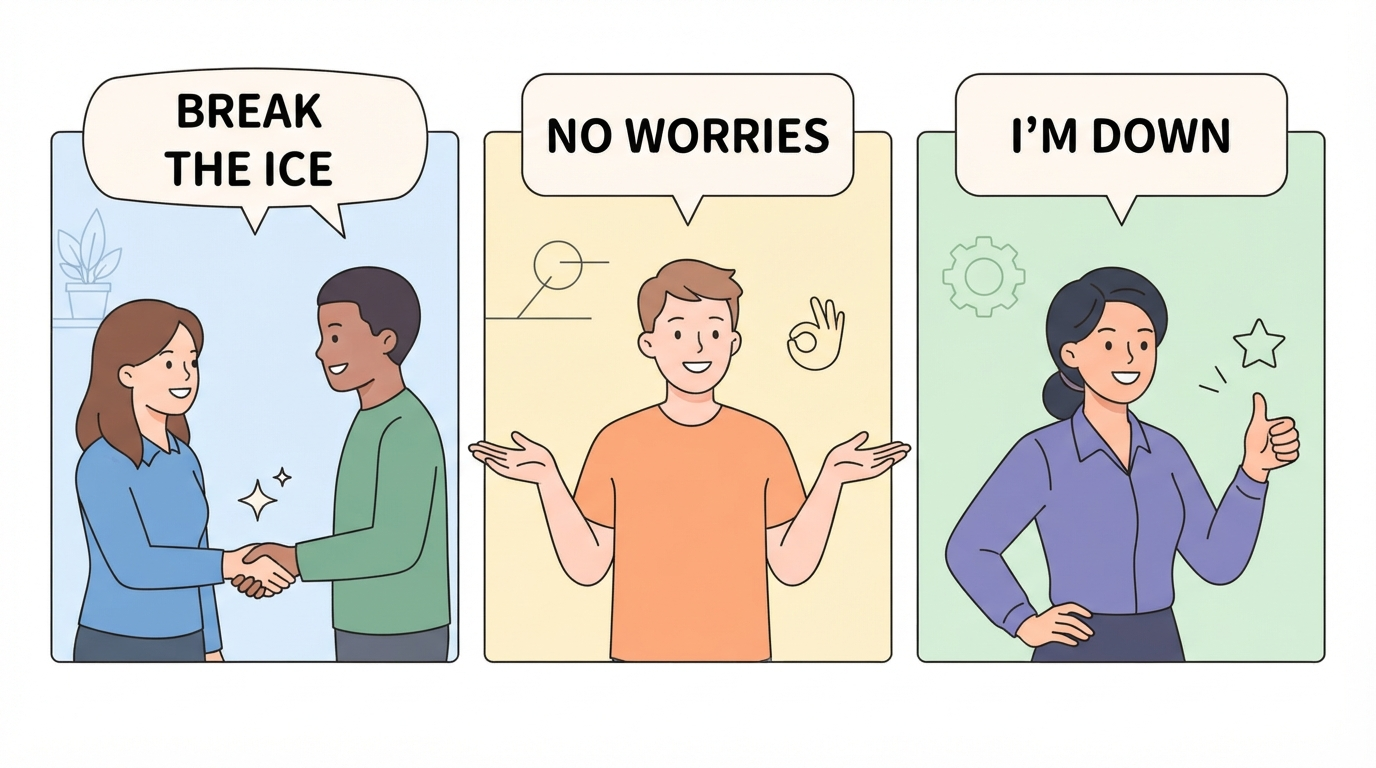
| break the ice | mencairkan suasana | He told a joke to break the ice at the party. |
| catch you later | sampai jumpa lagi | I have to go now, catch you later! |
| what's up? | ada apa? / apa kabar? | Hey, what's up? Long time no see! |
| for real | sungguhan/serius | Wait, you got the job? For real? |
| my bad | salahku | Oh, my bad, I forgot to text you back. |
| no worries | tidak apa-apa/santai saja | No worries, it happens to everyone. |
Bereaksi dan setuju
| Idiom | Arti | Contoh Kalimat |
|---|---|---|
| I'm down | aku setuju/mau ikut | Movie night? I'm down! |
| sounds like a plan | kedengarannya oke | Meet at 7? Sounds like a plan. |
| on the same page | sepaham/sepikiran | Good, we're on the same page about the trip. |
| piece of cake | gampang banget | The test was a piece of cake. |
| hang in there | tetap semangat/bertahan | I know it's hard, but hang in there. |
| that's on me | itu traktiranku | Don't worry about the bill, that's on me. |
| kill two birds with one stone | sekali mendayung dua tiga pulau terlampaui | By biking to work, I kill two birds with one stone — exercise and saving money. |
Membicarakan hidup dan keberuntungan
| Idiom | Arti | Contoh Kalimat |
|---|---|---|
| under the weather | kurang enak badan | I'm feeling a bit under the weather today. |
| once in a blue moon | jarang sekali | We only meet up once in a blue moon. |
| cost an arm and a leg | mahal sekali | That new phone costs an arm and a leg. |
| let the cat out of the bag | membocorkan rahasia | She let the cat out of the bag about the surprise party. |
| up in the air | belum pasti | Our holiday plans are still up in the air. |
| out of the blue | tiba-tiba/tanpa diduga | He called me out of the blue after years. |
| hit the books | belajar dengan giat | I need to hit the books before my exam. |
- Contoh percakapan: "I need to hit the books, I'm feeling a bit under the weather too." — "Hang in there, you've got this!"
Kesalahan umum
- ❌ "He broke the literal ice on the table to start the conversation." → ✅ "He broke the ice by telling a funny story." (idiom adalah frasa tetap dengan makna kiasan — jangan diartikan secara harfiah atau diubah katanya)
- ❌ "That's very cost an arm and a leg." → ✅ "That costs an arm and a leg." (idiom mengikuti tata bahasa normal — jangan menambah kata seperti very di tengahnya)
- ❌ "I hit the book yesterday." → ✅ "I hit the books yesterday." (beberapa idiom memakai bentuk jamak yang tetap — hit the books, bukan hit the book)
Latihan cepat
0/4 terjawab1. What does 'break the ice' mean?
2. Choose the correctly formed idiom.
3. Choose the correct sentence.
4. If your plans are 'up in the air', they are ______.
Jawab semua 4 soal untuk melihat skormu.
Frequently Asked Questions
Why is "He broke the literal ice on the table to start the conversation." incorrect?
The correct form is "He broke the ice by telling a funny story." Idioms are fixed phrases with a figurative meaning — don't take them literally or change the words.
What's the correct way to say "That's very cost an arm and a leg."?
The correct form is "That costs an arm and a leg." Idioms follow normal sentence grammar — don't insert extra words like very in the middle.
Is it correct to say "I hit the book yesterday."?
The correct form is "I hit the books yesterday." Some idioms use a fixed plural — hit the books, not hit the book.