Cara Memberi Saran dalam Bahasa Inggris: Should, Could, Why Don't You
Pelajari berbagai cara memberi saran dalam bahasa Inggris — should, had better, could, why don't you, how about, dan let's — lengkap dengan kesalahan umum yang perlu dihindari.
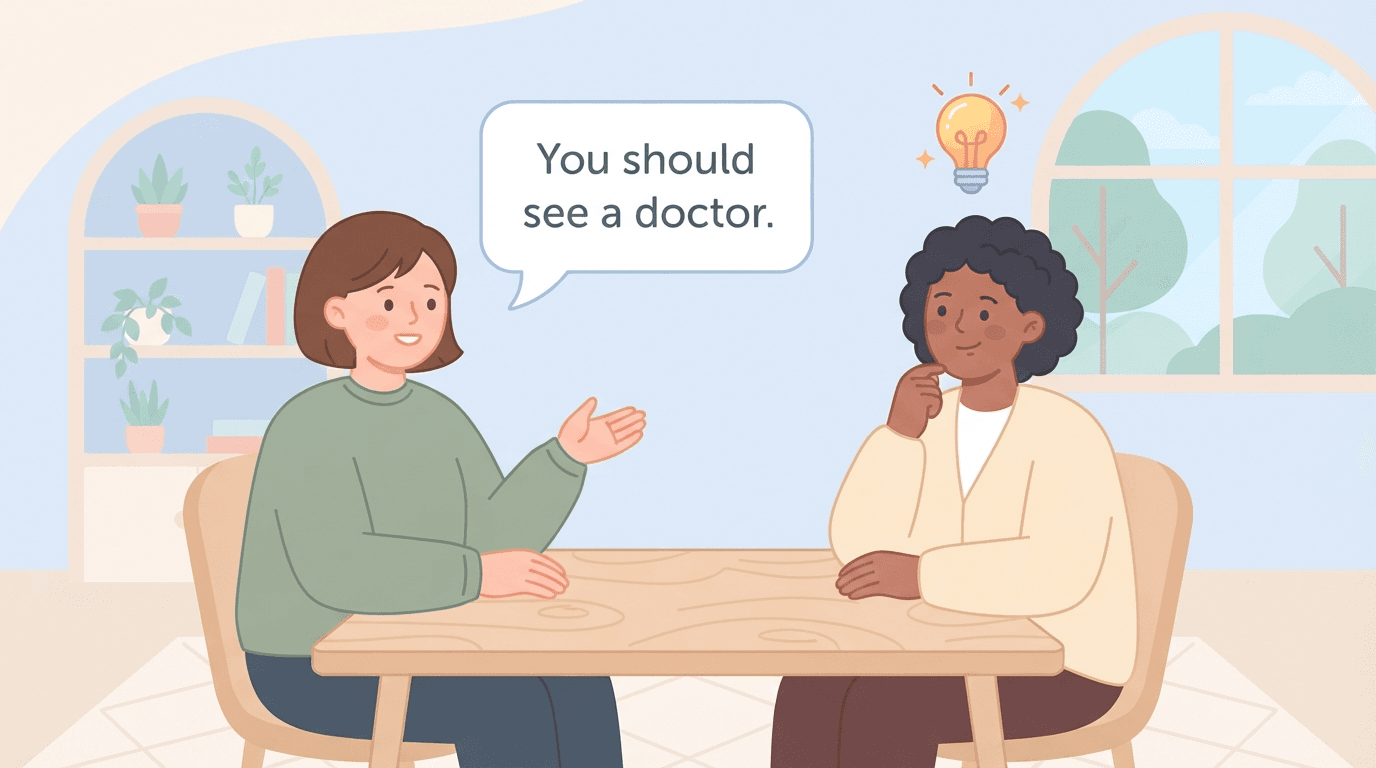
Bahasa Inggris punya banyak cara untuk memberi saran — dari yang santai sampai yang mendesak.
You should see a doctor. (Kamu sebaiknya periksa ke dokter.)
Setiap ungkapan punya nuansa kekuatan dan kesopanan yang berbeda.
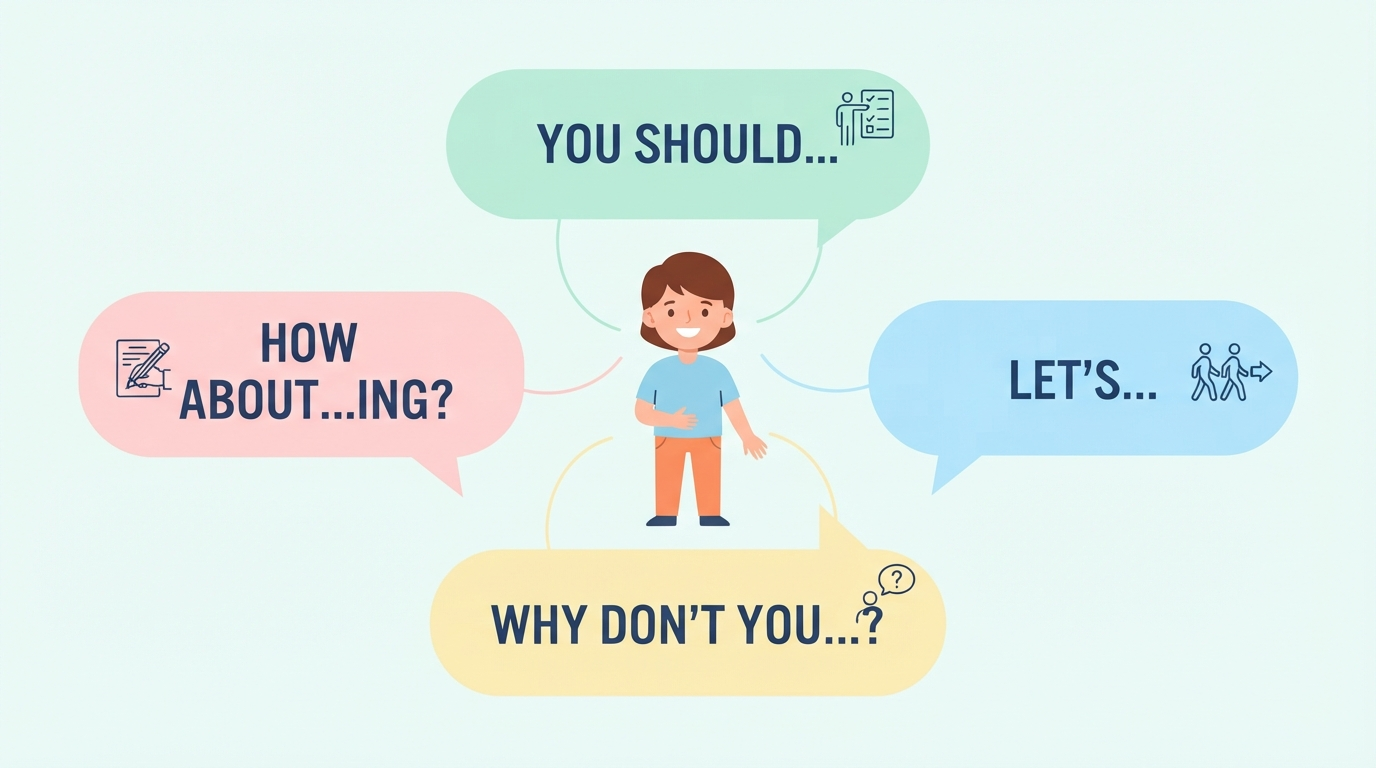
Should / shouldn't
Saran umum, netral.
- You should drink more water.
- You shouldn't stay up so late.
Had better
Saran yang lebih mendesak — ada konsekuensi negatif kalau tidak diikuti.
- You'd better hurry, or you'll miss the bus.
- We'd better leave now.
Could
Menawarkan satu pilihan di antara beberapa kemungkinan — bukan kewajiban.
- You could try calling her instead.
- We could go to the beach this weekend.
Pertanyaan untuk menyarankan
- Why don't you talk to your manager?
- How about going for a walk?
- What about asking a friend for help?
Let's
Mengajak orang lain melakukan sesuatu bersama.
- Let's go to the movies tonight.
- Let's not argue about this.
If I were you, ...
Saran hipotetis, seolah-olah pembicara ada di posisi lawan bicara.
- If I were you, I would study harder.
- If I were you, I wouldn't quit yet.
Kesalahan umum
- ❌ "You should to see a doctor." → ✅ "You should see a doctor." (should diikuti kata kerja dasar, tanpa "to")
- ❌ "How about go to the beach?" → ✅ "How about going to the beach?" (how about / what about diikuti -ing, bukan kata kerja dasar)
- ❌ "If I were you, I will study harder." → ✅ "If I were you, I would study harder." (pola saran hipotetis ini memakai would, bukan will)
Lihat juga: Perbedaan Should, Must, dan Have To
Latihan cepat
0/4 terjawab1. You ______ see a doctor.
2. How about ______ to the beach?
3. If I were you, I ______ study harder.
4. "______ go to the movies tonight?" (suggesting an activity together)
Jawab semua 4 soal untuk melihat skormu.
Frequently Asked Questions
Why is "You should to see a doctor." incorrect?
Modal verbs like "should" are followed directly by the base verb, with no "to".
What's the difference between "should" and "had better"?
"Had better" is stronger and implies a negative consequence if the advice isn't followed; "should" is more general advice.
Why does "how about" need "-ing"?
Because "how about" and "what about" function like prepositions here, and verbs after prepositions take the -ing form.