Relative Clause: Kapan Memakai Who, Which, dan That
Pelajari cara menggabungkan dua kalimat dengan relative clause menggunakan who, which, dan that, lengkap dengan aturan dan contoh.
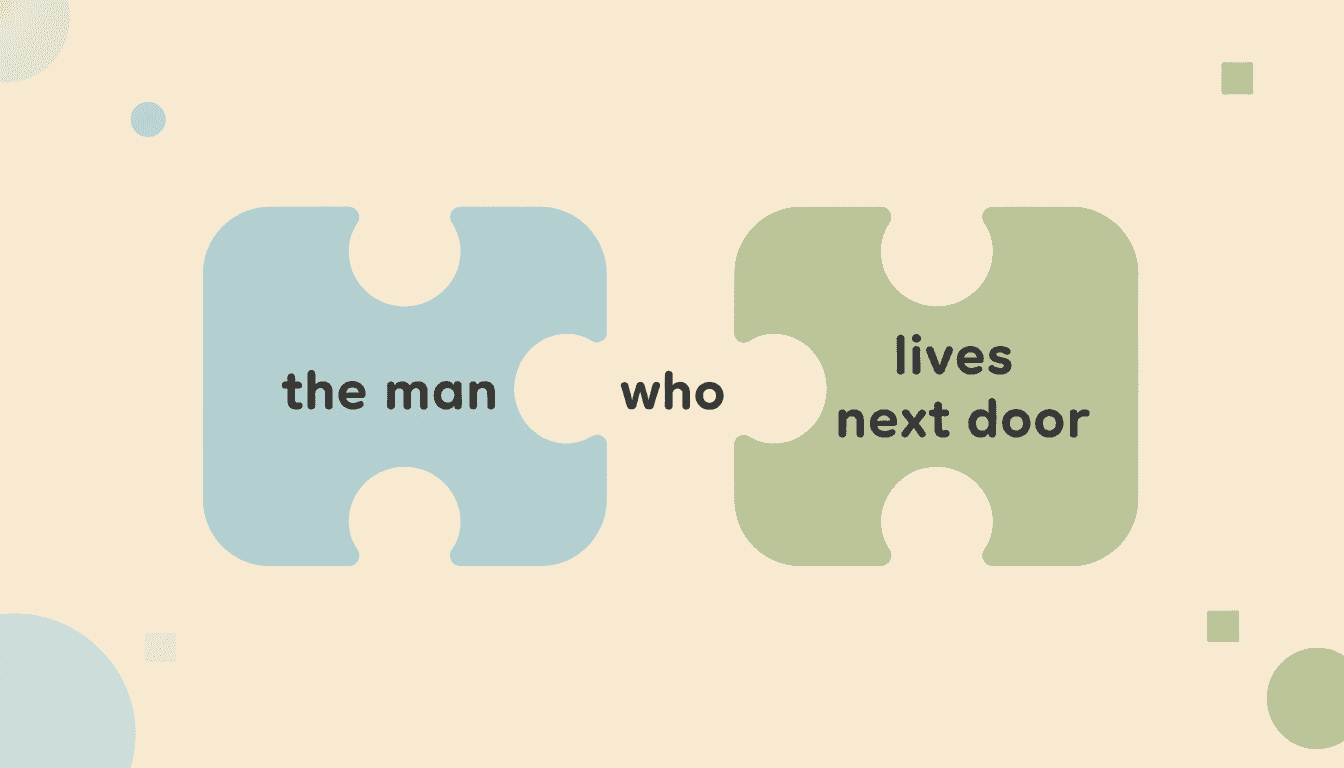
Relative clause adalah klausa yang memberi informasi tambahan tentang kata benda, tanpa perlu membuat kalimat baru yang terpisah. Klausa ini diawali dengan relative pronoun: who, which, atau that.
The woman who lives next door is a doctor.
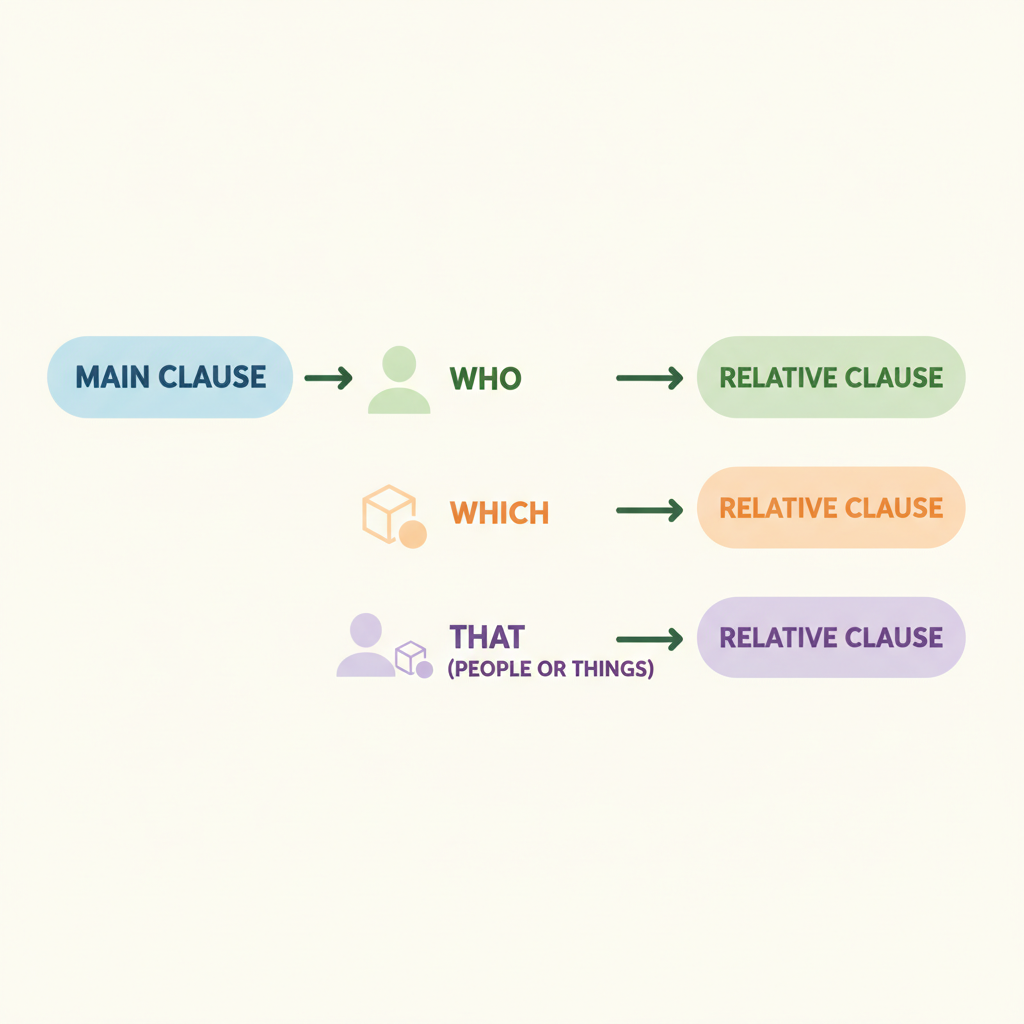
Who, which, that: kapan dipakai
| Relative pronoun | Dipakai untuk | Contoh |
|---|---|---|
| who | orang | The man who called you is my uncle. |
| which | benda/hewan | The book which is on the table is mine. |
| that | orang atau benda (informal, umum) | The car that broke down is mine. |
Dalam bahasa Inggris sehari-hari, that sering menggantikan who atau which, terutama pada defining relative clause (dijelaskan di bawah).
Defining relative clauses
Klausa ini memberi informasi penting — tanpa klausa ini, kita tidak tahu benda/orang mana yang dimaksud. Tidak memakai koma.
- The student who studies the hardest usually gets the best grades.
- I lost the phone that I bought last week.
Non-defining relative clauses
Klausa ini memberi informasi tambahan, bukan penting — kalimat tetap jelas tanpa klausa ini. Selalu memakai koma, dan tidak boleh memakai "that".
- My brother, who lives in Bandung, is visiting this weekend. (aku hanya punya satu kakak, jadi info ini hanya tambahan)
- This book, which I bought last year, is really good.
Menghilangkan relative pronoun (object relative clause)
Kalau relative pronoun berfungsi sebagai objek klausa (bukan subjek), pronoun ini bisa dihilangkan dalam defining relative clause.
- The book (that) I read was amazing. (that = objek, bisa dihilangkan)
- The man (who) I met yesterday was very kind.
Tapi kalau relative pronoun berfungsi sebagai subjek klausa, pronoun ini tidak bisa dihilangkan.
- ❌ The woman lives next door is a doctor. → ✅ The woman who lives next door is a doctor. (who = subjek dari "lives")
Kesalahan umum
- ❌ "The man which called you is my boss." → ✅ "The man who called you is my boss." (who untuk orang)
- ❌ "My sister, that lives in Bali, is a teacher." → ✅ "My sister, who lives in Bali, is a teacher." (non-defining tidak memakai "that")
- ❌ "The book I bought it was expensive." → ✅ "The book (that) I bought was expensive." (jangan pakai dua kali ganti objek — "it" berlebihan)
Relative clause membuat kalimatmu terdengar lebih natural dan efisien — daripada menulis dua kalimat pendek terpisah, kamu bisa menggabungkannya jadi satu kalimat yang mengalir.
Latihan cepat
0/4 terjawab1. The woman ______ lives next door is a doctor.
2. This is the book ______ I told you about.
3. My father, ______ is 60 years old, still works full-time.
4. The car ______ broke down yesterday is finally fixed.
Jawab semua 4 soal untuk melihat skormu.
Frequently Asked Questions
Why is "The man which called you is my boss." incorrect?
The correct form is "The man who called you is my boss." Who for people.
What's the correct way to say "My sister, that lives in Bali, is a teacher."?
The correct form is "My sister, who lives in Bali, is a teacher." Non-defining clauses don't use "that".
Is it correct to say "The book I bought it was expensive."?
The correct form is "The book I bought was expensive." Don't duplicate the object — "it" is redundant.