Conditional Sentence Tipe 2: If + Past Simple, Would
Pelajari second conditional untuk membicarakan situasi hipotetis atau tidak nyata di masa sekarang/masa depan, lengkap dengan struktur dan contoh.
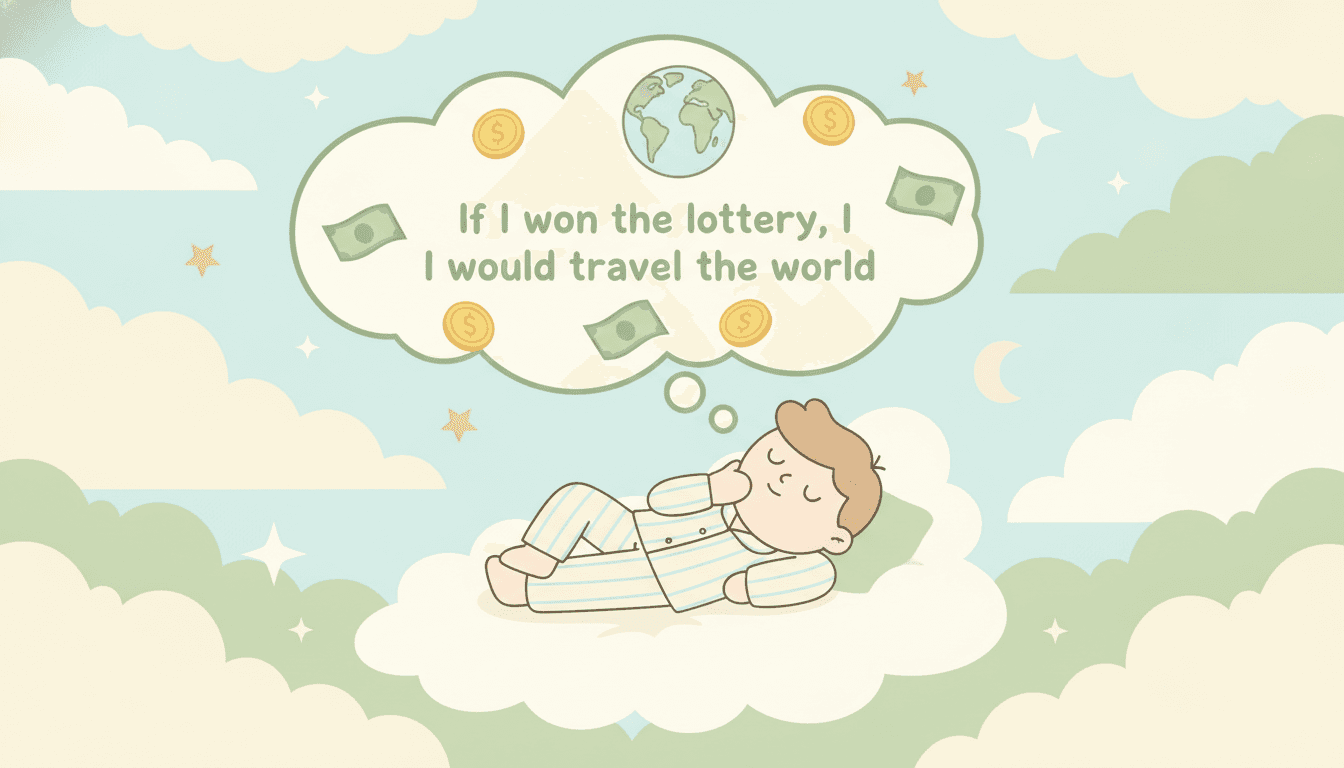
Second conditional dipakai untuk membicarakan situasi hipotetis atau tidak nyata — sesuatu yang tidak benar sekarang, atau kecil kemungkinan terjadi di masa depan.
If I won the lottery, I would travel the world.
Kalimat ini tidak berarti kita benar-benar akan memenangkan lotere — ini imajinasi tentang situasi yang tidak nyata.
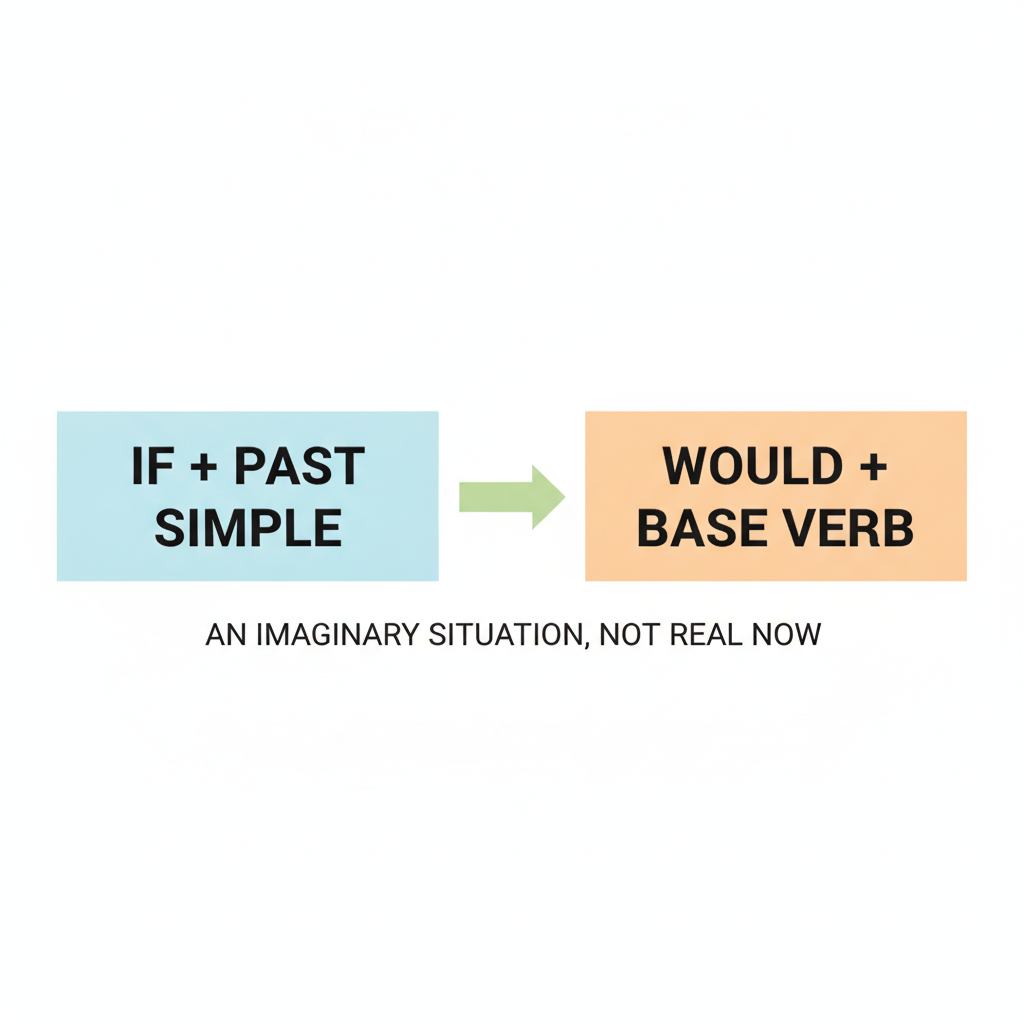
Struktur
If + simple past, ... would + bentuk dasar
| Klausa if (kondisi tidak nyata) | Klausa hasil (hipotetis) |
|---|---|
| If + simple past | would + bentuk dasar |
| If I had more time | I would learn to play guitar. |
| If she spoke English fluently | she would get a better job. |
Catatan penting: "were" untuk semua subjek
Dalam second conditional yang formal, kata kerja to be di klausa "if" memakai were untuk semua subjek, termasuk I/he/she/it — bukan "was".
- If I were you, I would apologize. (bentuk formal, sangat umum dalam saran)
- If he were taller, he could reach the shelf.
Dalam percakapan santai, "was" kadang masih dipakai untuk I/he/she/it, tapi "If I were you" adalah ungkapan tetap yang selalu memakai "were".
Kapan menggunakan second conditional
1. Situasi yang bertentangan dengan kenyataan sekarang
- If I had a car, I would drive to work. (kenyataannya: aku tidak punya mobil)
- If she lived closer, we would meet more often. (kenyataannya: dia tinggal jauh)
2. Situasi yang tidak mungkin atau kecil kemungkinan di masa depan
- If I won the lottery, I would buy a house. (kemungkinan sangat kecil)
- If I were the president, I would change the education system. (hipotetis murni)
3. Memberi saran (If I were you...)
- If I were you, I would talk to her first.
First conditional vs second conditional
| First conditional (mungkin nyata) | Second conditional (hipotetis/tidak nyata) |
|---|---|
| If it rains, I will stay home. (kemungkinan nyata) | If it rained every day, the crops would die. (hipotetis) |
| If I have enough money, I will buy it. (mungkin terjadi) | If I had enough money, I would buy a yacht. (kecil kemungkinan) |
Kesalahan umum
- ❌ "If I would have more money, I would travel more." → ✅ "If I had more money, I would travel more." (klausa if tidak memakai would)
- ❌ "If I was you, I would say sorry." → ✅ "If I were you, I would say sorry." (bentuk formal memakai were)
- ❌ "If she will study harder, she would pass." → ✅ "If she studied harder, she would pass." (klausa if memakai simple past, bukan will)
Second conditional adalah cara alami untuk membicarakan angan-angan, saran, dan situasi imajiner — kuncinya selalu simple past di klausa if, would di klausa hasil.
Latihan cepat
0/4 terjawab1. If I ______ more time, I would travel more.
2. If I ______ you, I would apologize.
3. If she ______ harder, she would pass the exam.
4. What ______ you do if you won the lottery?
Jawab semua 4 soal untuk melihat skormu.
Frequently Asked Questions
Why is "If I would have more money, I would travel more." incorrect?
The correct form is "If I had more money, I would travel more." The if clause doesn't use would.
What's the correct way to say "If I was you, I would say sorry."?
The correct form is "If I were you, I would say sorry." The formal form uses were.
Is it correct to say "If she will study harder, she would pass."?
The correct form is "If she studied harder, she would pass." The if clause uses simple past, not will.