Zero Conditional: If + Present Simple untuk Fakta Umum
Pelajari zero conditional — if + present simple, present simple — untuk membicarakan fakta ilmiah, kebenaran umum, dan kebiasaan, lengkap dengan kesalahan umum yang perlu dihindari.
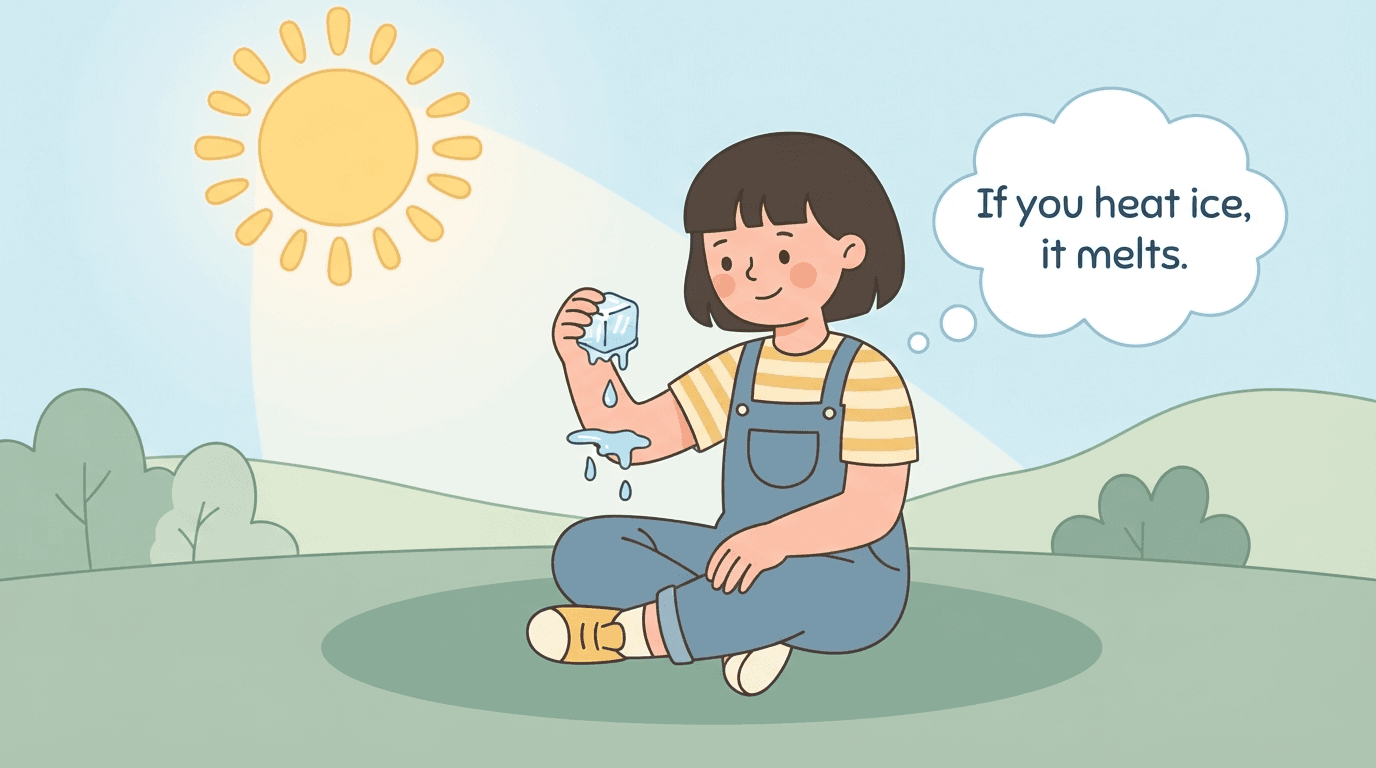
Zero conditional digunakan untuk membicarakan sesuatu yang selalu benar — fakta ilmiah, kebenaran umum, atau kebiasaan.
If you heat ice, it melts. (Kalau es dipanaskan, es mencair — selalu begitu.)
Ini bukan prediksi tentang masa depan. Ini adalah fakta yang selalu terjadi setiap kali kondisinya terpenuhi.
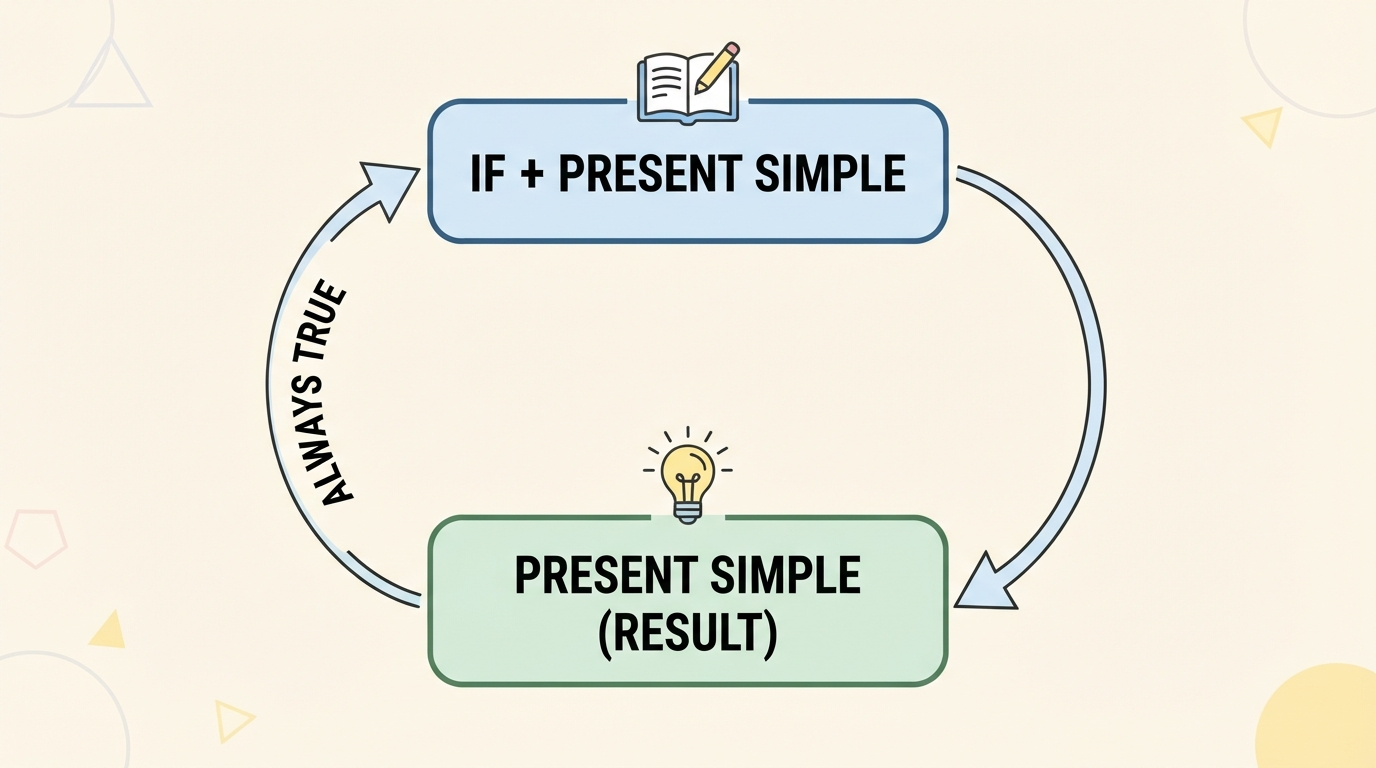
Struktur
Kedua bagian kalimat menggunakan present simple — tidak ada "will" sama sekali.
If + present simple, present simple.
- If you heat water to 100°C, it boils.
- If you mix blue and yellow, you get green.
- Plants die if they don't get water.
Kapan digunakan
1. Fakta ilmiah dan alam
- If you freeze water, it turns to ice.
- Metal expands if you heat it.
2. Kebenaran umum
- If children eat too much sugar, they get hyperactive.
3. Kebiasaan dan rutinitas
- If I wake up late, I skip breakfast.
"If" vs "when"
Dalam zero conditional, if dan when bisa saling menggantikan karena hasilnya selalu terjadi.
- If you heat ice, it melts. = When you heat ice, it melts.
Kesalahan umum
- ❌ "If you heat ice, it will melt." → ✅ "If you heat ice, it melts." (fakta umum memakai present simple di kedua bagian kalimat, bukan "will")
- ❌ "If water freezes, it turned to ice." → ✅ "If water freezes, it turns to ice." (kedua bagian kalimat harus present simple, bukan past)
- ❌ "If you touch fire, it would burn you." → ✅ "If you touch fire, it burns you." ("would" dipakai untuk situasi hipotetis di second conditional, bukan fakta umum)
Latihan cepat
0/4 terjawab1. If you heat ice, it ______.
2. If water freezes, it ______ to ice.
3. If you touch fire, it ______ you.
4. The zero conditional describes...
Jawab semua 4 soal untuk melihat skormu.
Frequently Asked Questions
Why is "If you heat ice, it will melt." incorrect for the zero conditional?
Because the zero conditional states a general truth, not a specific future prediction — both clauses use present simple, not "will".
What's the difference between the zero and the first conditional?
The zero conditional describes something always true (if + present simple, present simple). The first conditional describes a specific future possibility (if + present simple, will + base verb).
Can I use "when" instead of "if" in the zero conditional?
Yes. Since the result always happens, "if" and "when" are interchangeable in the zero conditional.